
At a Glance:
The Power of Absorption: Decorative Acoustic Panels
Direct-Field vs. Indirect-Field Sound Masking
Acoustic Panels vs Sound Masking for Offices
Engineering Privacy: White Noise vs Pink Noise Sound Masking Systems
How to Reduce Echo in Large Rooms: A Practical Checklist
In modern open-plan spaces, unwanted noise is a major productivity killer. To restore acoustic balance, two key solutions exist: decorative acoustic panels and sound masking.
Understanding the difference is key. Sound behaves like water, flowing and bouncing off hard surfaces. To control it, you can either absorb the sound or cover it up. This guide explains both methods and why combining them often creates the most effective acoustic environments.
Create the Perfect Work Environment
Transform your office space into an exceptional work environment where employees enjoy the privacy they deserve. Discover how sound masking can enhance your office by consulting an expert at Logic Integration today!
Learn More About Sound MaskingThe Power of Absorption: Decorative Acoustic Panels
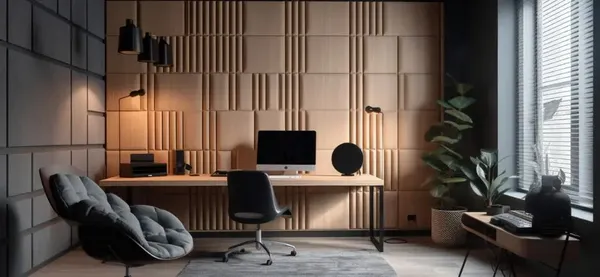
Ever been in a massive cathedral or an empty gym where a whisper echoes endlessly? Sound waves hit hard surfaces like glass and concrete, reflecting energy back into the room. To fix this, you need sound absorption.
Decorative acoustic panels trap that reflective energy. When sound hits a panel's porous material (like foam or felt), it's converted into a tiny amount of heat. The sound dies instead of bouncing back, which is how to reduce echo in large rooms.
Modern acoustic treatments are far from the ugly foam of the past. Today's panels offer significant benefits of decorative sound-absorbing panels:
- Functionality: They solve acoustic issues by reducing echo.
- Aesthetics: They act as beautiful design elements, enhancing a room's look while improving its sound.
The Science of Addition: Sound Masking
While absorption removes sound, sound masking adds it in a controlled way. Adding sound to create calm may seem counterintuitive, but it works. By gently raising the ambient background noise, sound masking makes distant conversations less intelligible, which supports focus and privacy.
This is the principle behind commercial sound masking. A coffee shop provides a good example: the chatter blends into a steady wash, making it easier to concentrate. Sound masking systems replicate this by using a tuned spectrum that specifically targets the frequencies of human speech.
Modern sound masking systems can also be efficient.
- They use low-power emitters and smart zoning to avoid overpowering quiet areas.
- An integrator can confirm which components carry ENERGYSTAR® ratings.
- Understanding power management can turn an acoustic upgrade into an operational win.
When discussing these systems, the comparison of white noise vs pink noise sound masking systems often arises.
- White noise contains all frequencies at equal intensity, sounding harsh like radio static.
- Pink noise sounds deeper and more natural because its energy is balanced across frequencies.
Modern sound masking systems are tuned to sit in the background, making a space feel calmer.
Direct-Field vs. Indirect-Field Sound Masking

Sound masking isn't a one-size-fits-all solution; its delivery method can make a significant difference. The two main types are direct-field and indirect-field. A direct-field system points emitters down into the room, while an indirect-field system places speakers in the plenum space above the ceiling.
- Direct-field (down-firing) emitters: Small emitters in the ceiling direct sound masking straight into the space. This method offers targeted coverage, ideal for areas with exposed ceilings or floor plans needing precise zone control.
- Indirect-field (plenum) speakers: Speakers are positioned above ceiling tiles, using the plenum to disperse the sound masking diffusely. This option keeps technology hidden and creates evenly blended sound across a large area.
How to choose between direct-field vs. indirect-field: a quick checklist
A quick evaluation of your space can point you toward the right solution.
- Ceiling type: A drop ceiling with a plenum makes an indirect-field system possible. Without a plenum, a direct-field approach is necessary.
- Room structure: Exposed ceilings or complex architectural features often work better with targeted direct-field emitters.
- Aesthetics: A plenum installation hides hardware completely. However, direct-field emitters can also be discreet.
- Zoning needs: Spaces with varied acoustic requirements benefit from the precise control of direct-field systems.
Ultimately, a professional site survey is the best first step to ensure you get the right equipment and achieve the desired speech privacy.
Acoustic Panels vs Sound Masking for Offices

When comparing acoustic panels vs. sound masking for offices, the choice depends on the specific problem.
If a room has an echo, acoustic panels are the solution. They absorb sound, improving clarity for better communication.
If privacy is the issue, speech privacy solutions for open floor plans are necessary. Sound masking is effective at preventing conversations from traveling through open areas. In environments like law firms or medical clinics, this confidentiality is essential. For instance, sound masking for HIPAA compliance is standard in healthcare facilities to protect patient information. It introduces a subtle, ambient sound that covers human speech, ensuring conversations remain private.
Learn more: Transform Your Home with Thoughtful Lighting Design
Designing with Intent: Architectural Acoustic Solutions
The modern workspace, often built with glass and steel, looks beautiful but can be an acoustic nightmare. This has driven the rise of architectural acoustic solutions for modern workspaces. Design firms now integrate acoustics into a building's fabric from the start, not as an afterthought.
Logic Integration, a premier AV firm, turns complex acoustic concepts into real-world results through meticulous site surveys and acoustic modeling. This preparation is key to our sound masking process, ensuring the plan fits the actual room. A proper site survey measures the existing noise floor and identifies reflection points that cause fatigue.
Acoustic modeling further refines the plan:
- Intentional Panel Placement: Vicoustic panels are placed at first reflection points to maximize the benefits of decorative sound-absorbing panels.
- Smarter Emitter Selection: The design specifies direct-field versus plenum installation for even and comfortable sound masking coverage.
- Tuning for Optimal Outcomes: A well-tuned system works seamlessly without being noticeable.
When installing a Vicoustic setup, Logic Integration considers the room's dimensions and materials, placing panels at primary reflection points to turn a noisy room into a sanctuary of clarity. You can learn more about our approach to sound masking on our website.
Sustainable Materials in Acoustic Design
Great spaces shouldn't be built on waste. Sustainability and performance can coexist, making material choice part of the story a room tells.
Vicoustic’s VMT lines use VicPET Wool, a material made primarily from recycled plastic bottles. This is significant because acoustic upgrades often cover large surface areas, so the materials add up quickly.
Here are the practical takeaways for a modern and responsible acoustic plan:
- Recycled content with real acoustic purpose: PET-based treatments offer the porous absorption needed for speech and mid-to-high frequency control, supporting a lower-impact materials strategy.
- Better specification options for design teams: VMT panels feature color and pattern options, helping teams achieve performance targets without sacrificing aesthetics.
- Sustainability that still looks premium: In architectural acoustic solutions for modern workspaces, an eco-friendly approach must integrate seamlessly. The VMT finish supports contemporary interiors while quietly improving comfort.
A room doesn't just sound better with the right acoustics; it can feel better too. The decisions behind it are intentional, efficient, and built to last.
Engineering Privacy: White Noise vs Pink Noise Sound Masking Systems
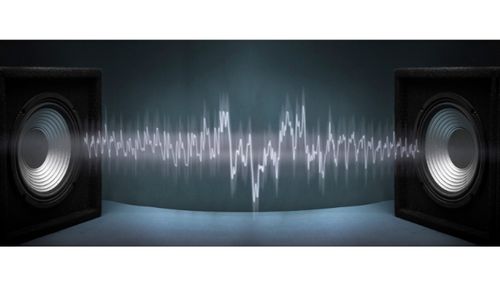
To understand their impact, we must examine how these systems are tuned. Professional sound masking installation requires analyzing a room's noise floor to find the optimal sound level—not too quiet to be ineffective, yet not so loud that it becomes a distraction.
When experts evaluate white noise vs pink noise sound masking systems, they aim for a level that the brain can filter out. A properly tuned system from Biamp or Cambridge Sound Management leverages our ability to ignore constant, non-threatening stimuli. The brain learns to disregard the steady sound, taking distracting noises like typing and distant conversations with it.
The Role of Commercial Sound Masking in the Gig Economy
The way we work is changing, with more people in shared workspaces and boutique offices. This shift makes commercial sound masking an essential investment for building owners. Paired with commercial AV solutions, these systems create privacy without expensive construction.
A workspace that is too quiet feels awkward, while one that is too loud kills concentration. By using speech privacy solutions for open floor plans, owners can cultivate an atmosphere that feels energetic yet respectful.
Here's why sound masking earns its keep:
- It protects deep work time.
- It reduces mental drain from constant distractions.
- It helps restore natural focus.
For solopreneurs and side-hustle enthusiasts, the right sound masking system is a game-changer, helping restore focus instantly when it's needed most.
Learn more: 3 Brands Making High Impact LED Video Wall Panels
Home Studio: Why Acoustic Panels Matter for Critical Listening and Recording
In a home studio, an untreated room can distort what you hear. For accurate sound, the benefits of decorative sound absorbing panels are essential. Acoustic panels reduce reflections that can obscure stereo imaging, blur reverb, and lead to poor mixing decisions. During recording, panels minimize echo and comb filtering, which can make vocals sound thin. These panels also integrate with home automation solutions to create an ideal living and working environment.
How to upgrade a home studio fast: a practical starter checklist
- Treat first reflection points: Place panels on side walls and the ceiling above your listening position.
- Control front and rear walls: Use absorption to reduce low-mid buildup that causes "muddy" mixes.
- Add coverage behind the microphone: This dramatically reduces room tone in vocal recordings.
- Aim for consistency, not perfection: The goal is a reliable sound for translatable mix decisions.
In a busy home, sound masking can also help by covering inconsistent outside noise during editing. For tracking and mixing, however, proper acoustic treatment is the foundation for achieving professional-sounding results.
How to Reduce Echo in Large Rooms: A Practical Checklist

To improve a room's echo, follow these steps:
- Identify hard surfaces: Look for large glass walls, concrete floors, or high ceilings that reflect sound.
- Add soft materials: Introduce area rugs, thick curtains, or high-quality acoustic panels to absorb sound.
- Use the 20% rule: Aim to cover about 20% of the wall surface with acoustic panels for a noticeable improvement.
Strategic placement is key. It's best to target reflection points, typically on side walls at ear level. For rooms with high ceilings, acoustic clouds or baffles are effective architectural acoustic solutions for modern workspaces.
Sound Masking for HIPAA Compliance and Legal Standards
In many professional settings, privacy isn't just a courtesy—it's the law. Regulations like HIPAA and the Gramm-Leach-Bliley Act (GLBA) mandate the protection of spoken conversations. Financial institutions, for instance, must safeguard "nonpublic personal information" discussed face-to-face.
Using sound masking for HIPAA compliance is a proactive measure that demonstrates a commitment to client security and builds trust.
Key benefits include:
- Legal Adherence: Helps facilities meet strict regulatory standards for speech privacy.
- Client Confidence: Creates a secure environment where clients feel comfortable sharing sensitive information.
- Reputation Management: Safeguards a company's reputation as a trustworthy entity.
Logic Integration specializes in deploying these systems to ensure each installation is both functional and legally compliant.
The Synergy of a Combined System
Combining acoustic panels vs sound masking for offices creates an ideal "acoustic comfort zone." This dual approach is the gold standard for modern offices, addressing both sound quality and speech privacy.
- Acoustic Panels: These muffle sharp noises, making a space feel more inviting.
- Sound Masking: This system acts as a privacy screen, stopping conversations from traveling.
An acoustically balanced environment reduces "listener fatigue," helping people stay energized and focused throughout the day. Logic Integration designs systems with this human factor in mind, considering how the space feels from morning to evening.
Conclusion: Reclaiming Your Environment
The environment you're in directly impacts your quality of life. Choosing acoustic treatments isn't just about budget; it's about making a space work for its occupants.
The right path depends on your goals:
- To improve audio fidelity for music and voices, explore the benefits of decorative sound absorbing panels.
- To create a secure workspace where confidentiality is key, commercial sound masking is the superior tool.
Often, the best results come from using both. This combination enhances conversational clarity up close while increasing privacy across the room. Better acoustics are achievable without massive budgets. A smart plan can use sound masking to protect speech privacy while thoughtful panel placement creates a comfortable soundscape. Sustainable options like Vicoustic VMT panels, made from recycled plastics, support high performance and responsible design.
Companies like Logic Integration can help tailor a solution with site surveys and acoustic modeling, creating a clear roadmap for improving your space.
Learn more: How Music Shapes Guest Experience in Hospitality Spaces
Frequently Asked Questions
Acoustic panels improve sound quality inside a room by absorbing echo. Soundproofing is a structural method that stops sound from moving between spaces. Acoustic panels enhance clarity, while soundproofing provides isolation.
Soundproofing blocks sound from passing between rooms by adding mass to structures. Conversely, sound masking introduces a subtle background sound to reduce the clarity of distant speech. While soundproofing offers complete isolation, sound masking enhances speech privacy in open spaces without structural modifications.
Sound masking raises the ambient sound level to align with the frequency of human speech. This process reduces the intelligibility of conversations, causing them to blend into the background. The technique is effective for protecting confidentiality and minimizing distractions in open settings such as clinics and law offices.
Yes. Acoustic panels and sound masking can be used together for complete sound management. Acoustic panels absorb sound to reduce echoes and improve clarity. Sound masking adds background noise to enhance speech privacy. This combination creates a balanced acoustic environment, making it clear for listening yet private for conversations.
Why Trust Logic Integration?
Logic Integration is a Colorado-based custom integrator, offering a wide range of AV and automation services, for both residential and commercial settings. We partner with leading technology brands to provide you with the latest and most reliable solutions. We’ll collaborate closely with you to understand your needs and preferences, crafting a user-friendly system that complements your space and lifestyle. Our commitment to clean installations ensures all technology blends seamlessly with your environment, minimizing clutter and maximizing aesthetics. At Logic AV, we believe that technology integration is an ongoing process. This is why we offer comprehensive maintenance and support services to ensure any system we install continues to function flawlessly for years to come.
Our team is comprised of experienced, certified professionals with deep technical knowledge and a passion for innovative solutions. Named CTA’s Integrator of the Year, we are fully accredited by organizations such as the Custom Electronic Design & Installation Association, Home Technology Association, and National Association of Home Builders. Ultimately, choosing Logic Integration means trusting your AV and automation needs to a proven, experienced, and customer-focused company. We'll transform your space into a connected, intelligent environment that elevates your everyday life.
Technology Solutions by Logic Integration
As a rapidly developing technology and integration firm, we keep ourselves up-to-date with the latest products, technologies, and industry trends. As a result, our technical team is the most well-trained in the industry, enabling us to effectively improve our clients' communication and entertainment needs. At Logic Integration, we place great emphasis on the quality of audio and visual products as well as our quick response times to service and sales communication. Our experienced technicians are well-versed in the correct installation of smart home products, video solutions, home theater options, and more. Visit us in person or call us at 303-484-8237 to learn more.