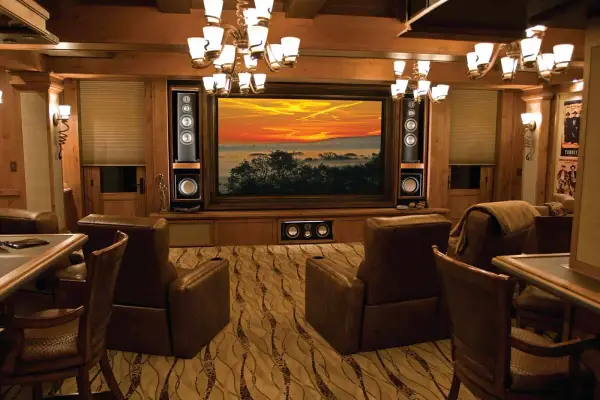
You finally mount that massive, brilliant 4K television to the living room wall, dim the lights, and hit play on a blockbuster movie, only to find yourself straining to hear what the actors are whispering. A visually stunning picture loses its impact entirely when paired with thin, lifeless audio from built-in television speakers. Building a true cinematic experience requires a dedicated approach to your home theater system. Finding the right surround sound setup turns a flat viewing session into an immersive event that fills the entire room.
We have navigated this exact frustration with countless local clients and designed audio solutions that completely fix the problem. This guide will walk you through everything you need to know about channel configurations, the physical types of speakers available, and how your specific room dimensions impact audio performance. By the time you finish reading, you will understand exactly how to build a high-end audio setup that matches both your space and your listening preferences.
Upgrade Your Home Audio Experience
Discover premium speakers and custom installation services designed for your unique living space.
Key Takeaways
- Channel Configurations: Understanding numbers like 5.1 or 5.1.2 helps you map out exact speaker placement for standard or spatial audio.
- Room Dynamics: The physical size and hard surfaces of your living space dictate what type of acoustic room treatment and speaker power you need.
- Equipment Matching: Pairing your speakers with the correct audio receiver guarantees clear, distortion-free sound and prevents long-term hardware damage.
Decoding Surround Sound Configurations: 5.1 vs 7.1 vs Atmos
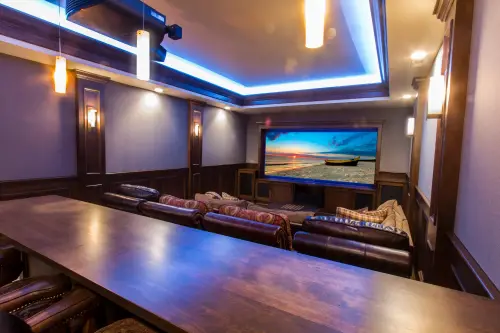
Shopping for audio gear often means staring at confusing numbers. The standard 5.1 configuration remains the foundation of a traditional home theater system. This setup uses a front left, front right, and dedicated center channel for dialogue, alongside two rear surround speakers and one subwoofer for deep bass.
Expanding to a 7.1 layout adds two more rear channels to fill larger spaces with directional effects. A Dolby Atmos setup takes a completely different approach by introducing height into the equation. Configurations like 5.1.2 include upward-firing or in-ceiling speakers that bounce audio down from above.
This spatial audio approach creates a genuine 3D soundstage where helicopters sound like they are actually flying directly over your couch. The right choice depends heavily on your room layout and ceiling height. You want a speaker placement guide that matches your specific architectural constraints.
The Impact of Room Size and Acoustics on Audio Quality
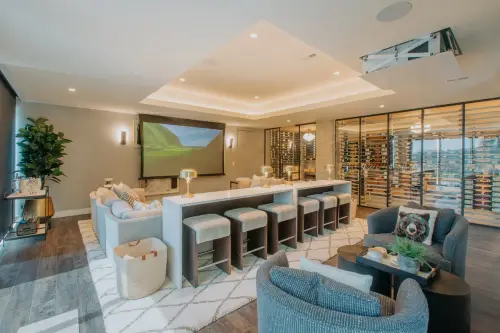
Buying premium McIntosh amplifiers or high-end Origin Acoustics speakers is only half the battle. Your physical room acts as the final component in your audio chain. Large, open-concept living rooms require significantly more power to pressurize the space with sound compared to smaller, enclosed media rooms.
Hardwood floors, glass windows, and bare drywall reflect sound waves aggressively. This creates harsh echoes that ruin the clarity of movie dialogue and musical details. Implementing acoustic room treatment absorbs these excess reflections so the pure audio reaches your ears directly.
You have several practical options for managing these reflections:
- Hanging heavy drapery over large glass windows to soften the room's overall acoustics.
- Mounting fabric-wrapped acoustic panels on the side walls to catch primary sound reflections.
- Laying thick area rugs directly between the primary listening seats and the front speakers.
The Pros and Cons of Wired vs Wireless Surround Sound
Deciding how to connect your system is just as important as picking the speakers themselves. A wireless home theater setup appeals to homeowners who want a clean look without tearing open their walls, while traditional wired systems remain the gold standard for pure, uncompressed audio fidelity.
Pros
Installation Flexibility
Wireless speakers can be placed virtually anywhere in a room without routing long speaker cables under baseboards.
Clean Aesthetics
Eliminating visible wires keeps your living space looking tidy and architecturally untouched.
System Expansion
Many wireless platforms allow you to add new speakers to other rooms over time for whole-home audio.
Renters Advantage
Because you do not need to drill holes for wiring, wireless systems are highly portable if you move.
Cons
Reliability Issues
Wireless signals can occasionally suffer from interference caused by heavy Wi-Fi traffic or thick plaster walls.
Power Requirements
Despite being labeled wireless, these speakers still require a physical power cord plugged into a nearby wall outlet to function.
Choosing Between Floor-standing, Bookshelf, and Architectural Speakers
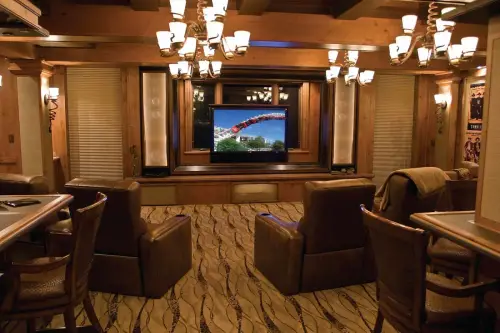
Selecting the physical form factor of your high-end audio equipment dictates both the aesthetic and acoustic impact of the room. Floor-standing models provide massive, full-range sound and incredible power for dedicated theater rooms. Their large cabinets house multiple drivers, producing rich low-end frequencies that smaller units simply cannot match.
Bookshelf speakers offer a highly versatile alternative for mid-sized rooms. You can place them on dedicated stands or integrate them directly into custom cabinetry. They deliver exceptional clarity but usually require pairing with a dedicated subwoofer to hit the lowest bass notes effectively.
Architectural audio focuses on hiding the technology completely. Exploring in-wall vs in-ceiling speakers reveals an ideal solution for modern, minimalist homes. At Logic Integration, we specialize in placing these flush-mounted speakers so they blend into your drywall while still delivering premium audio performance.
Comparing Floorstanding vs Bookshelf vs Architectural Speakers
| Speaker Type | Space Required | Bass Performance | Aesthetic Impact | Installation Complexity |
|---|---|---|---|---|
| Floor-standing | Requires significant floor space | Highly powerful and deep | Visually dominant in the room | Very simple plug and play |
| Bookshelf | Moderate space on stands or shelves | Moderate bass requiring a subwoofer | Visible but easily blended | Simple standard wiring |
| Architectural | Zero floor space required | Relies heavily on a separate subwoofer | Virtually invisible when painted | High difficulty requiring custom labor |
How to Match an AV Receiver to Your Surround Sound Speakers
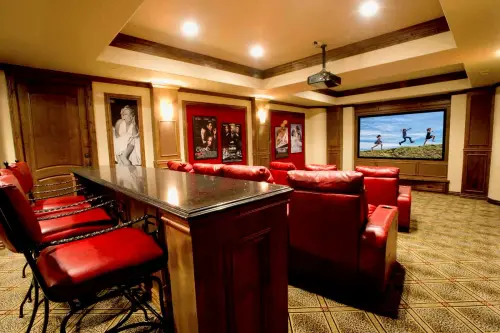
The AV receiver operates as the absolute brain and power plant of your entire home theater. Buying the best home audio speakers available means nothing if your receiver cannot drive them properly. You must match the receiver's continuous power output with the specific power handling and sensitivity ratings of your chosen speakers.
Failing to provide enough clean power leads to sound distortion and can physically blow your speaker tweeters over time. For a reliable professional baseline, always match a receiver that provides at least 50% more continuous wattage per channel than the speaker's minimum required power rating. This generous headroom prevents the amplifier from clipping during loud action scenes.
You also need to verify audio receiver compatibility with modern formats. If you plan to install overhead speakers, you must purchase a receiver explicitly labeled as an Atmos-compatible receiver. This guarantees the hardware can decode the spatial audio metadata and route it to the correct height channels.
The Value of Expert Setup for High-End Home Audio
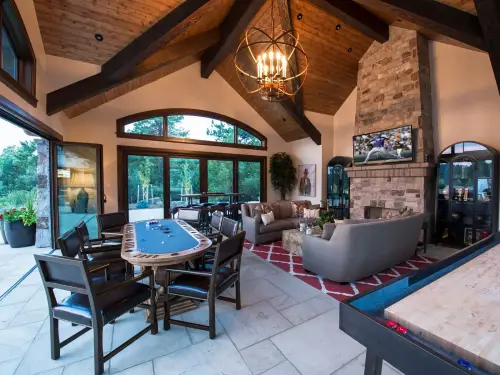
Investing in premium audio gear demands an equally premium approach to installation. Proper surround sound installation requires exact mathematical speaker angling, perfect seating distance calculations, and advanced digital room calibration. Relying on DIY setups frequently results in unbalanced volume levels and muddy sound profiles.
Running concealed wiring safely through walls and ceilings requires specialized tools and strict adherence to building codes. Our professional installers manage all the heavy lifting and technical troubleshooting for you. This expert touch guarantees flawless performance, correct phase wiring, and long-term reliability for your investment.
Maximize Your Surround Sound Experience with Logic Integration
Building the perfect audio system requires careful consideration of channel layouts, room acoustics optimization, and proper receiver matching. When all these elements align perfectly, your living room transforms into a captivating cinematic environment. Trusting a local expert removes the guesswork and technical headaches from the entire process. At Logic Integration, our team provides expert showroom guidance, professional installation, and dedicated local customer service that big-box stores simply cannot match. Visit us today to experience true high-fidelity audio and let us design the perfect system for your home.
Frequently Asked Questions about Surround Sound Systems
Standard audio directs sound in a flat plane around you using designated left, right, and rear channels. Spatial audio, like Dolby Atmos, adds height dimensions so sounds can move dynamically in a 3D bubble above your head.
Yes, you must purchase an AV receiver that explicitly includes Dolby Atmos decoding capabilities. A standard 5.1 receiver lacks the internal processing power to route height metadata to your overhead speakers.
Your front left and right speakers should form an equal-sided triangle with your primary listening seat, with the tweeters placed directly at ear level. Rear channels should sit just behind and slightly above the listening position to create immersive ambient effects.
You can technically mix brands, but you should always match the manufacturer and model line for your front three channels to maintain a consistent tonal balance. Subwoofers and overhead speakers offer more flexibility to mix brands without ruining the soundstage.
Bookshelf speakers are incredibly capable and perform beautifully in high-end spaces when supported by a high-quality subwoofer. They provide exceptional dialogue clarity and are perfect for rooms where massive floor-standing cabinets will not physically fit.
Professional installation costs vary widely depending on whether you need simple surface wiring or complex in-wall architectural mounting. A standard setup often starts around a few hundred dollars, while comprehensive custom room integration can scale into the thousands.
Why Trust Logic Integration?
Logic Integration is a Colorado-based custom integrator, offering a wide range of AV and automation services, for both residential and commercial settings. We partner with leading technology brands to provide you with the latest and most reliable solutions. We’ll collaborate closely with you to understand your needs and preferences, crafting a user-friendly system that complements your space and lifestyle. Our commitment to clean installations ensures all technology blends seamlessly with your environment, minimizing clutter and maximizing aesthetics. At Logic AV, we believe that technology integration is an ongoing process. This is why we offer comprehensive maintenance and support services to ensure any system we install continues to function flawlessly for years to come.
Our team is comprised of experienced, certified professionals with deep technical knowledge and a passion for innovative solutions. Named CTA’s Integrator of the Year, we are fully accredited by organizations such as the Custom Electronic Design & Installation Association, Home Technology Association, and National Association of Home Builders. Ultimately, choosing Logic Integration means trusting your AV and automation needs to a proven, experienced, and customer-focused company. We'll transform your space into a connected, intelligent environment that elevates your everyday life.
Technology Solutions by Logic Integration
As a rapidly developing technology and integration firm, we keep ourselves up-to-date with the latest products, technologies, and industry trends. As a result, our technical team is the most well-trained in the industry, enabling us to effectively improve our clients' communication and entertainment needs. At Logic Integration, we place great emphasis on the quality of audio and visual products as well as our quick response times to service and sales communication. Our experienced technicians are well-versed in the correct installation of smart home products, video solutions, home theater options, and more. Visit us in person or call us at 303-484-8237 to learn more.